Ha Sung Young had a rule. Wherever the four of them traveled, the destination had to be somewhere none of them had seen in a film, on a travel reel, or on a friend's Instagram story. It had to be somewhere that required a decision — not a search.
So when his colleague Min-jun found a small outfitter called RET operating in the Sundarbans — a name none of them could place on a map without looking — Sung Young said yes before anyone else had finished reading.
He called his three closest friends: Min-jun, the architect who had traveled fifty countries but never slept on a boat; Ji-yeon, the marine biologist who had studied dolphins in academic papers but never watched one surface from two metres away; and Dae-ho, the quietest of the four, a high school teacher who needed, more than any of them, to hear something other than his own thoughts for a few days.
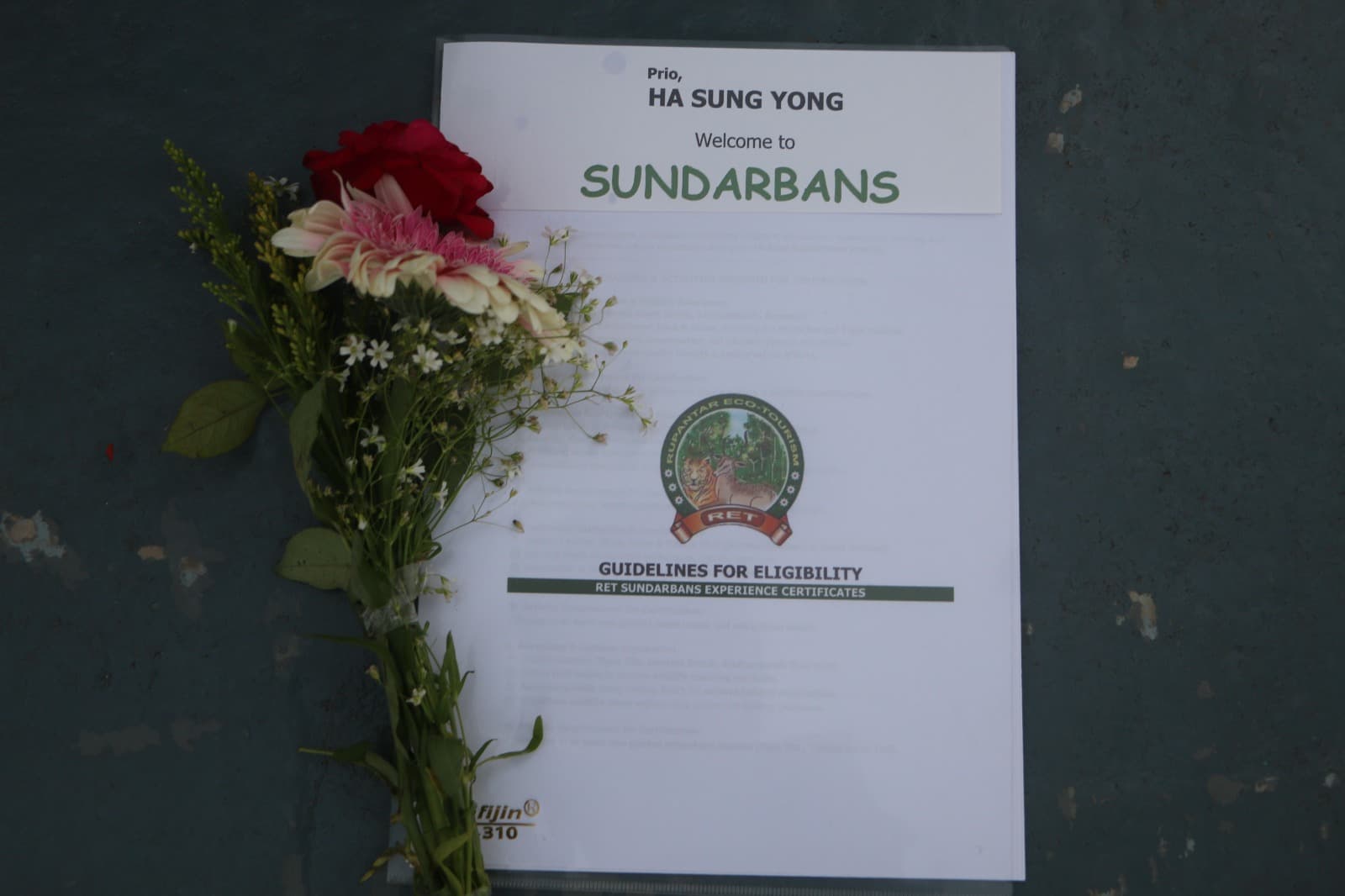
They flew into Dhaka. Then a private car south toward Khulna, the road dissolving into river delta and paddy fields, the sky growing wider. The four of them barely spoke. They were already somewhere different.
Night One — The City Lets Go
The boat departed Jelkhana Ghat after 11 PM, timed not by any clock but by the tide. That was the first surprise. Their RET guide — a man from Khulna named Rahim who had been reading these waterways since childhood — explained it simply: "The Sundarbans moves by its own schedule. We follow it."
Min-jun, who had designed buildings across Seoul, found himself on the deck watching the city lights disappear behind a curtain of mangrove root and darkness. There were no streetlights on the Pasur River. No billboards. After twenty minutes, the only light was the boat's bow lamp, casting a small yellow circle onto the black water ahead.
Ji-yeon was already leaning over the railing, watching the bow wave with her phone's torch — not for a photograph, but to see if anything moved beneath the surface. Nothing did. Not yet.
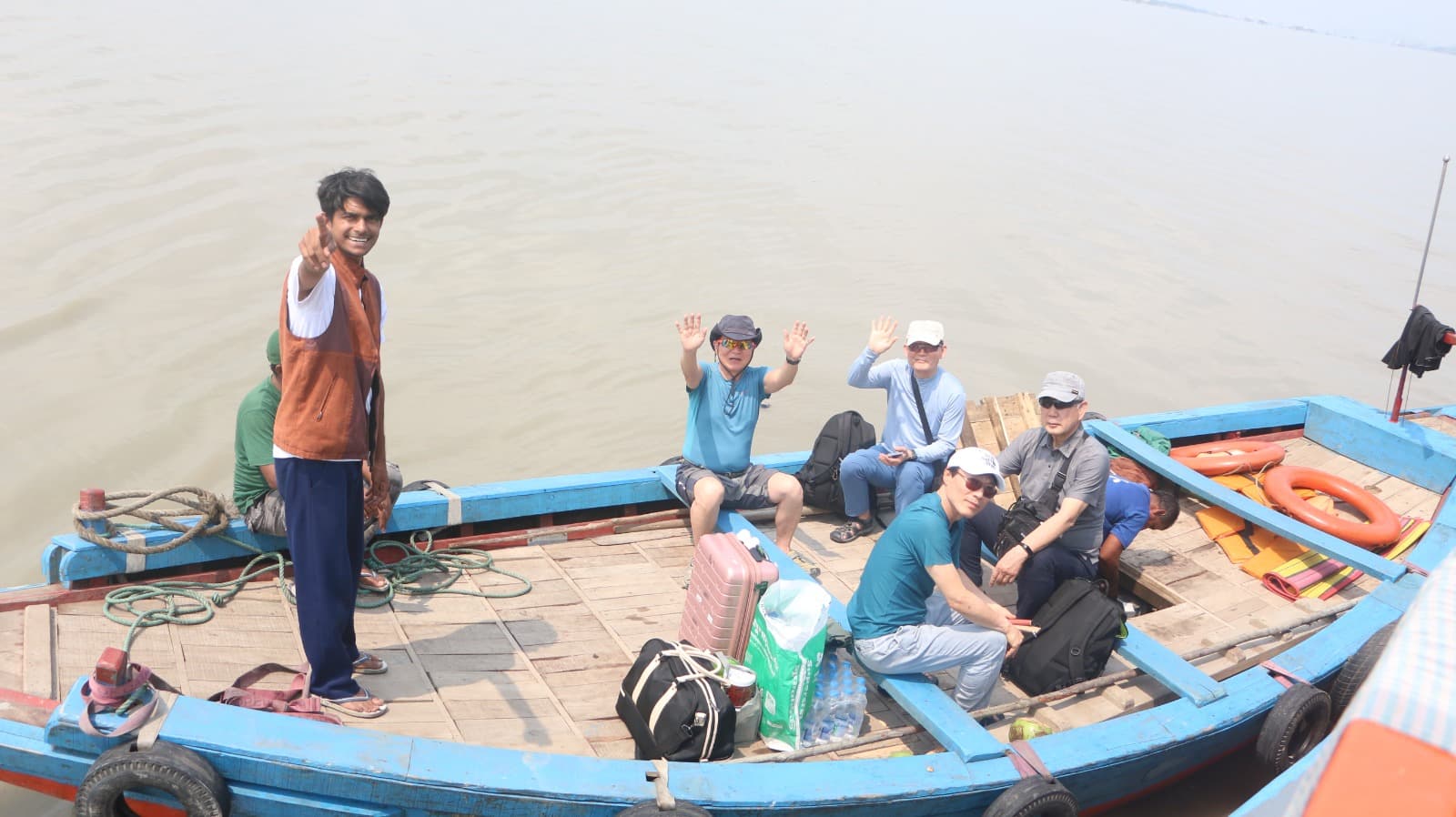
They slept as the boat pushed south through the Rupsha and into the Pasur — a tidal river that breathes with the moon. By the time the engine slowed and the anchor chain dropped into the water, they were at the Dhangmari–Pasur confluence. The Sundarbans had begun.
Day One Morning — The Dolphins Arrive First
Sung Young woke to the sound of Rahim's voice, low and unhurried, saying one word through the cabin door: "Dolphins."
It was 6:15 AM. The mist had not fully lifted. The four Koreans came out onto the deck in varying states of consciousness — Dae-ho still in his jacket, Ji-yeon already barefoot — and there they were. Three Irrawaddy dolphins rolling at the confluence where two rivers met. Not performing. Not aware of an audience. Just feeding, surfacing, moving in slow arcs through water the colour of dark tea.
"Ji-yeon sat down on the deck. She didn't reach for her camera. She just watched."
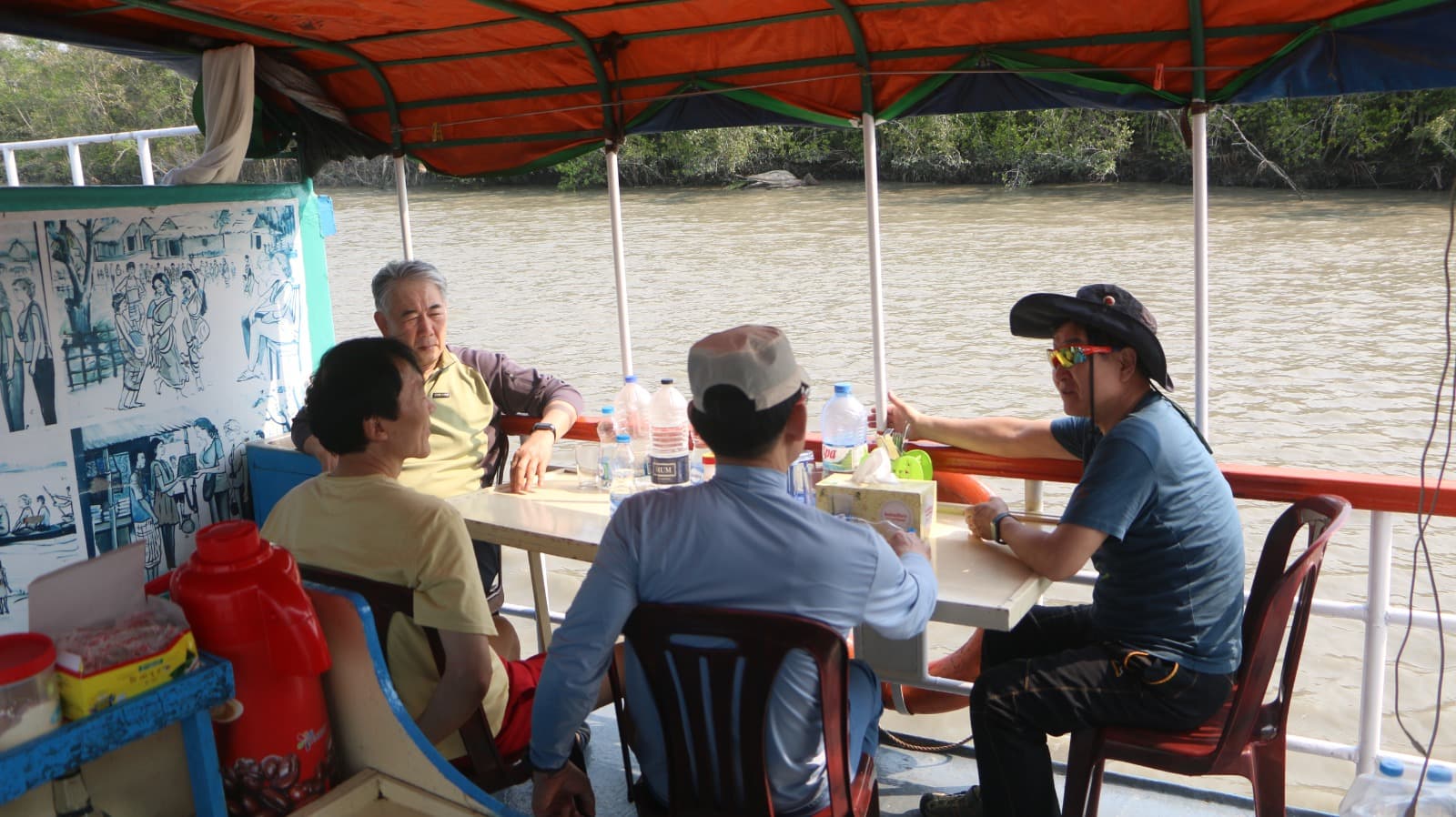
Breakfast was served on the water as the dolphins continued below. Sundarbans honey from a local Mawali collector — darker and more mineral than anything they'd tasted — spread on toast. Boiled eggs. Tea with condensed milk. The boat didn't move. There was nowhere else to be.
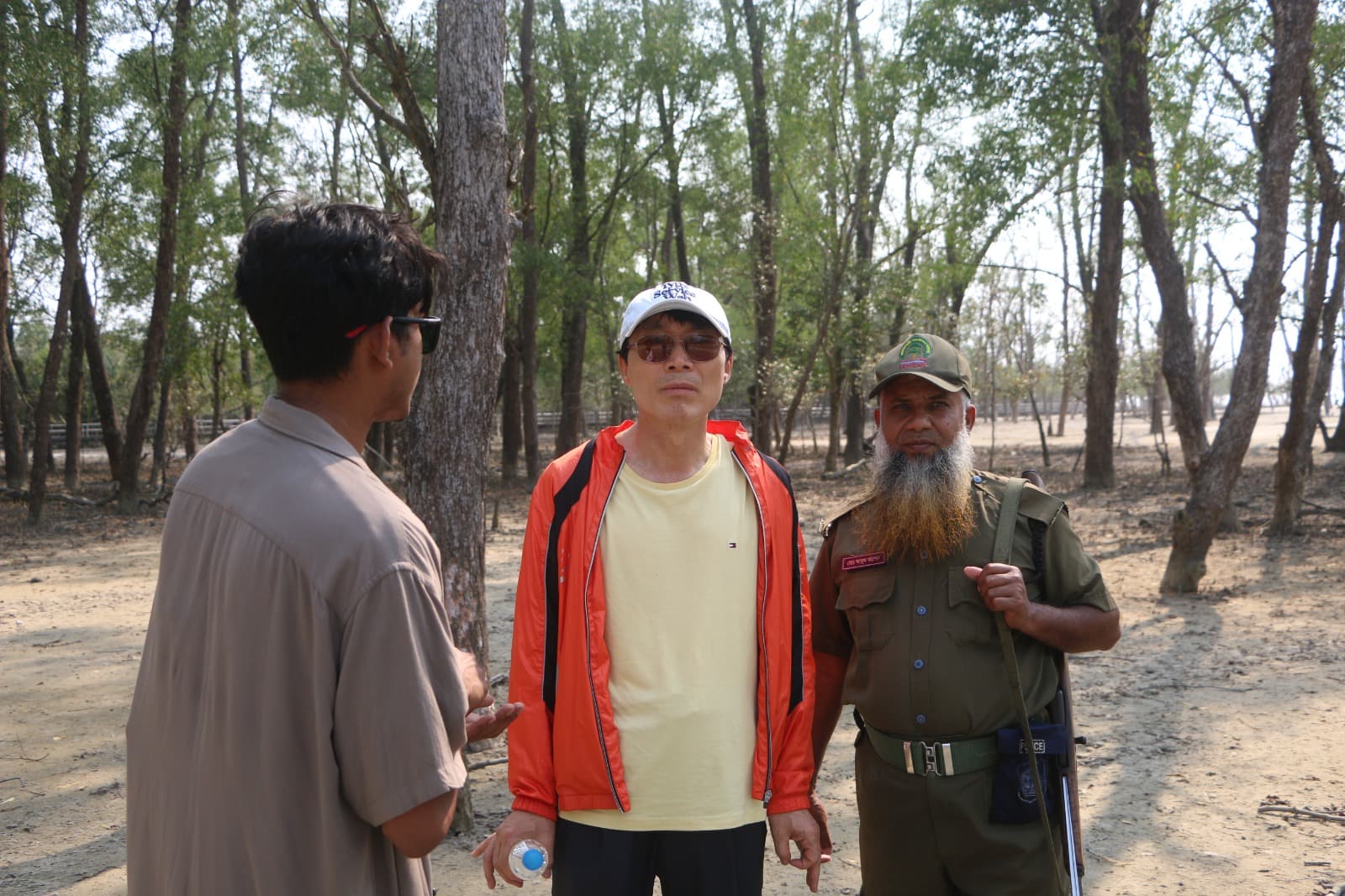
Mid-morning, as the tide dropped, Rahim announced the Dhangmari Khaal boat safari. The channel narrowed until the mangrove canopy nearly touched overhead. On the mud banks exposed by the receding tide: estuarine crocodiles. One, then another, then a third — prehistoric and utterly still. Min-jun whispered something in Korean that Rahim didn't understand, but the tone needed no translation. The forest was alive and they were guests inside it.
Day One Evening — Bonobibi and the Pot Song
Laudoob is the last village before the Sundarbans begins in earnest. Beyond it, there are no roads, no mobile signal, no permanent human presence — only the forest and the animals that have always lived there. The four Koreans walked its narrow paths in the late afternoon, past vegetable gardens and fishing nets drying on bamboo poles, past children who stared and then smiled and then ran alongside them for a while.
At the Bonobibi temple — a small, vivid shrine tended by the whole community, both Muslim and Hindu — Rahim explained the legend. Bonobibi, the Lady of the Forest, is called upon by honey collectors and woodcutters before they enter the deep Sundarbans. Her legend is not one of dominance over nature but of coexistence with it: take only what you need, harm nothing you don't have to. Dae-ho, the teacher, stood in front of the shrine for a long time.
That evening, in a villager's home — open walls, a packed earthen floor, oil lamps — a Pot Song session began. The Pot Song is a Bengali folk tradition: a painted scroll unrolled panel by panel as a storyteller sings the story illustrated on it. The tales were of the forest, of tigers, of fishermen. Sung Young understood no Bengali. He understood everything.
"They were four strangers from Seoul, sitting cross-legged on a mat in the last village before the wild, and they belonged completely."
Day Two — Forty Kilometres Into the Deep Forest
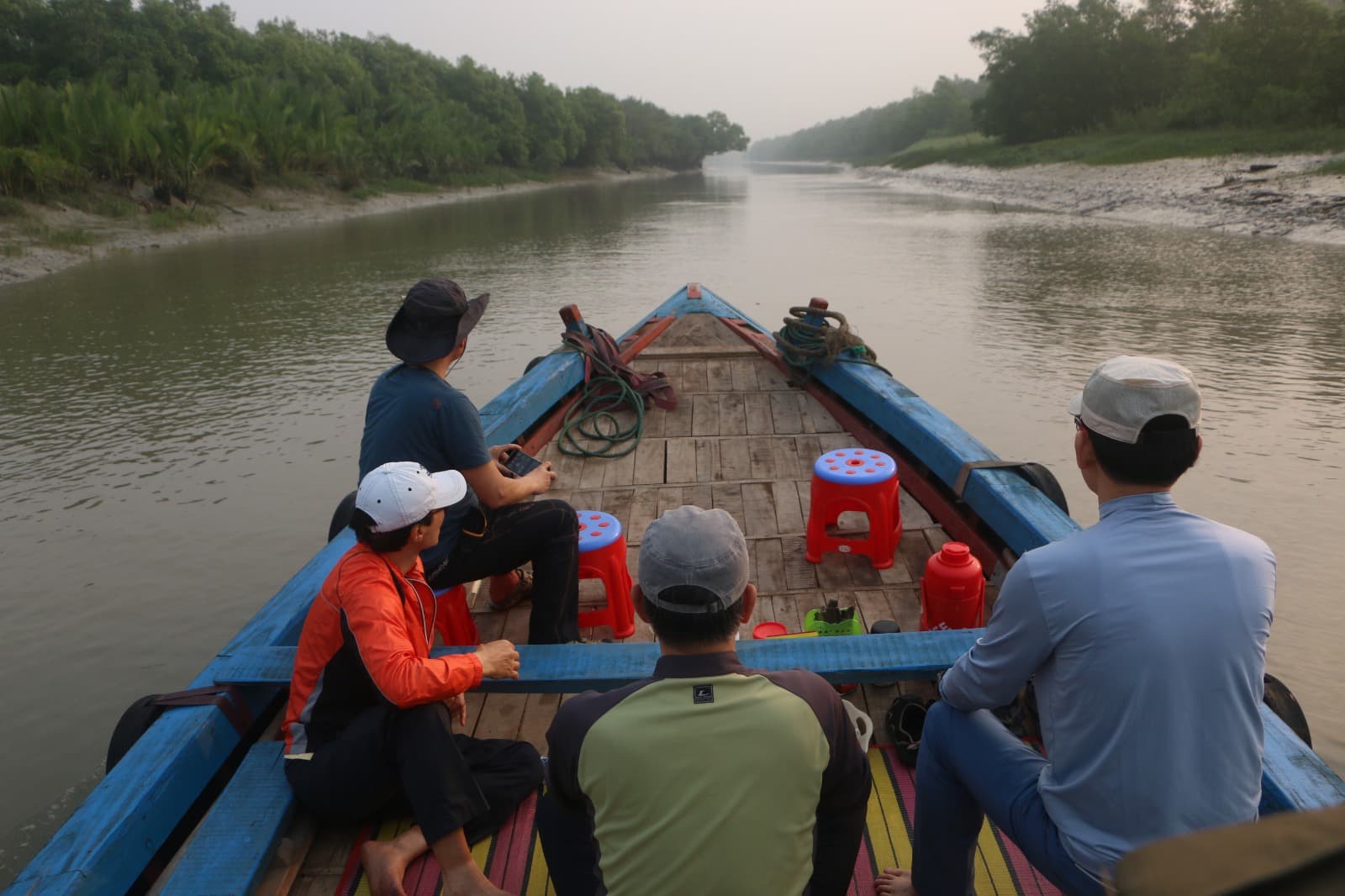
The Chori Khaal safari is four hours. Forty kilometres into one of the most significant wildlife corridors in the entire Sundarbans — dense, unbroken mangrove on both banks, the channel narrowing and widening without warning. The four Koreans sat in different parts of the boat and, for the first time in years, none of them spoke to each other for long stretches. Not because there was nothing to say. Because the forest made speech feel unnecessary.
Kingfishers crossed the channel in electric blue. A water monitor lizard the length of a man slid off a bank into the water with a sound like a stone being thrown. Macaques watched from the canopy above. Rahim pointed to a section of mud bank and said, quietly: "Tiger. Yesterday." The paw print was still there, the edges barely softened by time.
Min-jun photographed it. Then deleted the photograph. "I want to remember it as real," he said, "not as an image."
The dolphin sighting on the second morning was different from the first — more intimate, the boat lower in the water at that hour, the animals closer. Ji-yeon, who had written her graduate thesis on Irrawaddy dolphins without ever seeing one outside a dataset, sat on the bow and counted the surfacings. She lost count around eleven. She didn't mind.
Night Two — Tambolbunia, Zero Light
Sixty kilometres from any port. The forest anchors stretched in every direction. No electricity. No signal. No other boats. The cook prepared Koral fish BBQ on the deck — fresh from that morning, spiced with ginger and green chilli, eaten with fried rice and curd and a silence that felt earned.
After dinner, Dae-ho lay flat on the deck and looked at the sky. It was the kind of sky that cities in South Korea have not shown anyone in decades — full, dense, the Milky Way visible not as a concept but as a thing with texture. Rahim sat down nearby and named the constellations in Bengali. Dae-ho named them in Korean. They were the same stars.
"No phones. No sounds from the human world. Just the forest breathing around the boat and four men realising, slowly, how rarely they'd been truly quiet."
Sung Young, who had been the one to say yes to this trip, sat on the stern alone for an hour. He wasn't thinking about the itinerary, or the office he'd return to, or the next destination. He was just there. Present in a way that he couldn't remember being for a very long time.
Day Three Dawn — Pakhir Khaal by Dinggi
The dinggi is a small wooden rowboat — flat-bottomed, wide-bellied, moved by a single oar from the stern. At 6 AM, with the forest still dark at the water level and the sky just beginning to pale, Sung Young and Ji-yeon climbed down from the mother boat and into the dinggi with Rahim and a rower.
For two hours, they moved through the narrowest channels of Pakhir Khaal — ten kilometres of passages so close that the mangrove roots reached in from both sides. The rower did not use an engine. The only sound was the dip of the oar, the creak of the wood, and the birds waking in sequence above them.
A white-bellied sea eagle sat on a dead branch at eye level and did not move as they passed beneath it. A kingfisher hovered, dived, and returned to its branch with a silver thread of fish in its beak. Ji-yeon noted both in a small notebook she'd kept since the first day.
Min-jun and Dae-ho had taken the second dinggi. When the four of them met back at the mother boat for breakfast, no one described what they'd seen. They'd tell it later, back in Seoul, to people who'd want to know. For now, it was still too close to put into words.
Final Afternoon — The People Who Stay
Joymoni is a fishing village on the edge of the forest. The people who live here have always lived alongside the tiger. At the Wildlife Conservation Centre, the four Koreans met the Village Tiger Response Team — men and women who have lost family members to tiger attacks and have chosen, nonetheless, to protect the animal that took them.
Dae-ho, who teaches history to teenagers, sat and listened as a VTRT member — a man named Jalil whose father was taken by a tiger in 1998 — described what it means to live with that grief and still go into the forest every day to protect the animal responsible.
When Rahim translated, Dae-ho didn't respond immediately. When he did, he said: "This is the bravest thing I have heard from anyone."
They walked the fishing village afterward — through narrow alleys of thatched homes, past women preparing nets, past the school where the children had heard there were visitors from Korea and had waited to wave. Ji-yeon counted three bird species from the village path that she had never seen in the field before.
The boat departed at sunset. The crocodile appeared one last time at Dhangmari Khaal, sliding silently into the water as they passed. Irrawaddy dolphins surfaced once more at the confluence. It was as though the Sundarbans wanted one last word.
What They Carried Home
They sailed back to Khulna with salt in their hair and the smell of mangrove wood in their jackets. On the private drive back to Dhaka, all four of them slept for the first time in days — a different kind of sleep, deep and without interruption.
On the flight home, Sung Young opened his notes app — the one he uses to record things worth remembering — and typed a single line. Not a description of the forest, or the dolphins, or the tigers' paw print. Just this: "Go. Before you think about it too long."
Min-jun has already told three colleagues to book it. Ji-yeon is writing a personal essay about the Irrawaddy dolphin count she did from the dinggi. Dae-ho went back to his classroom and spent an entire lesson talking about Jalil and the VTRT and what it means to choose to protect something.
And Ha Sung Young is already wondering where they should go next. But quietly, he knows: nowhere will quite feel like the Sundarbans felt. Nowhere will quite feel like that night at Tambolbunia, the four of them under a full sky, the forest breathing around them, the world far away and completely unnecessary.
"The Sundarbans doesn't ask you to do anything. It asks you to be somewhere. That's harder. And it's the only thing that's ever made the difference."